
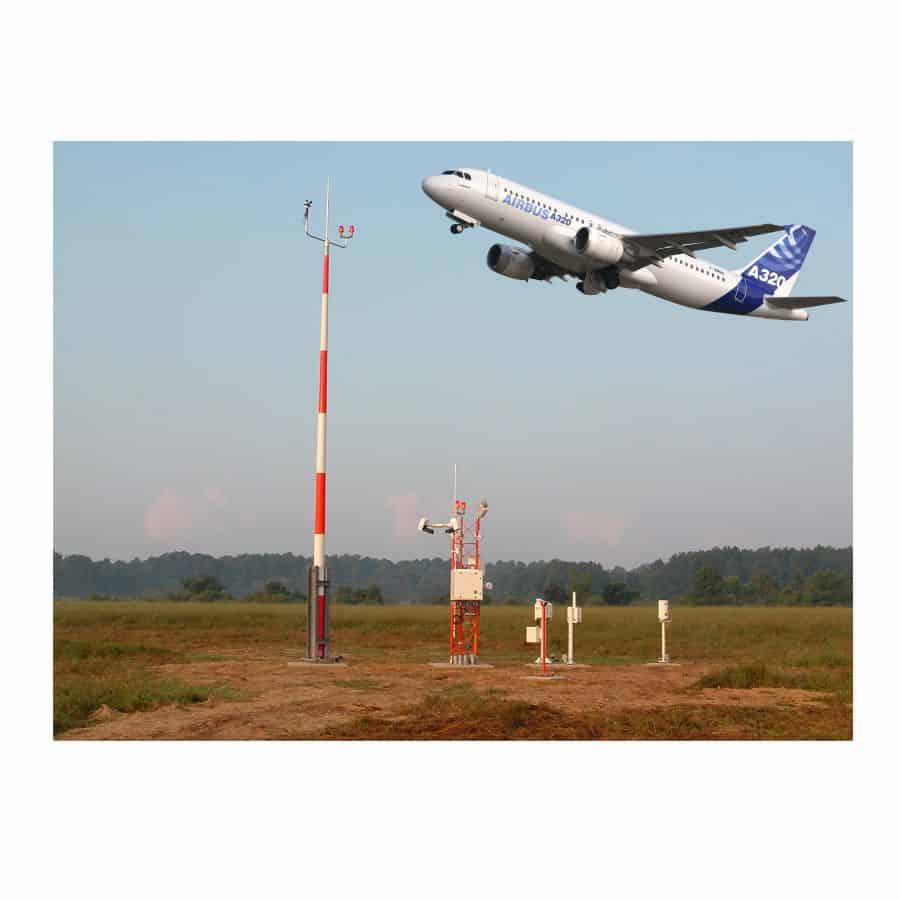
Automated Weather Observing Systems (AWOS) measure and report weather conditions for aviation applications. AWOS are installed in a variety of locations, including commercial and private airports, military air bases, and heliports. AWOS range in size and complexity, from a single weather station to a network of sensor groups on multiple runways.
A typical AWOS consists of the following components: Field Meteorological Sensors
- Wind speed and direction*
- Barometric pressure (altimeter setting)*
- Dew point (relative humidity)*
- Air temperature*
- Visibility
- Cloud height
- Precipitation amount and identification (present weather)
- Freezing rain
- Lightning detection (thunderstorm)
- RVR (Runway Visual Range)
- Ambient light
- Runway light intensity monitor (RLIM)
- Solar radiation
- Runway surface condition
Features
- Field Data Collection Unit (FDCU)*
- The FDCU collects data from all of the field sensors and processes it using Coastal’s ZENO® 6800 technology. The unit is enclosed in a waterproof enclosure and can include an optional display.
- Power Options
- AC power
- Solar power for all or part of the system
- Back-up battery
- Communications Options
- Cable modem
- Fiber-optic cable
- UHF/VHF/Spread Spectrum radio
- Wireless mesh network
- Ethernet/IP
- Server and Aviation INTERCEPT® Software*
- Voice and Data Output
- AFTN / ATIS
- Voice output to pilots
- Integration with national weather service and other meteorological databases
- Displays and Workstations
- PC workstations (weather observer, control tower, maintenance, etc.)
- All-in-one displays
- Other displays available